
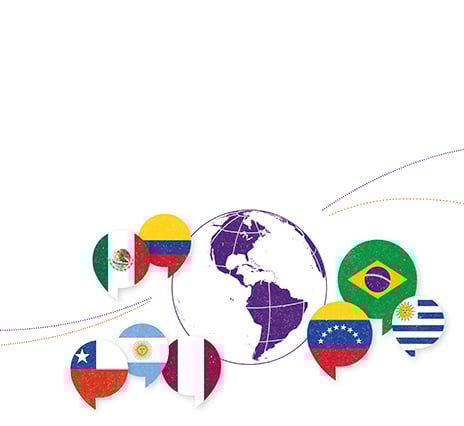
Drawing on data and insight from the Grant Thornton International Business Report (IBR), the Grant Thornton Global Dynamism Index (GDI), the Economist Intelligence Unit (EIU) and the International Monetary Fund (IMF), this short report considers the outlook for Latin America in 2015.
Filter insights by:
Showing 16 of 70 content results
Focus on Latin America
International Business Report (IBR)
A global guide to business relocation
Tax
There are a number of cost and commercial reasons why a group may consider relocating, but it is also important to understand the consequences.

Global M&A snapshot 2015
International Business Report (IBR)
Companies are increasingly focused on high-quality strategic transactions, with less time spent on investigating peripheral opportunities, according to our International Business Report (IBR), a survey of 5,400+ business leaders in 35 economies.

Women in business: the path to leadership
International Business Report (IBR)
Our 2015 women in business report looks at how to facilitate the career paths of women into senior management and offers 12 recommendations to society, government, businesses and women themselves about how to better support female advancement.

Hotels 2020: Welcoming tomorrow's guests
Hospitality and tourism
The hotel industry is going through a period of unprecedented, irreversible change and will look very different in 2020 than it does today.

The global economy in 2015
International Business Report (IBR)
Drawing on 10,000 interviews with company leaders and international forecast data, this report considers the outlook for the global economy and what this means for business growth prospects in 2015.

Consolidated financial statements
IFRS
This illustrative set of financial statements sets out good practice in the application of the presentation and disclosure requirements of IFRS for year-end reporters. It reflects changes in IFRS that are effective for the year ending 31 December 2013.

IFRS News - Q1 2015
IFRS
IFRS News is your quarterly update on all things relating to International Financial Reporting Standards. We’ll bring you up to speed on topical issues, provide comment and points of view and give you a summary of any significant developments.

Expanding horizons
Food & Beverage
F&B companies are using international expansion to chase profits globally.

Navigating changes to IFRS for CFOs
IFRS
This publication provides a high-level summary of recent changes to IFRS that will affect companies' future financial reporting. Changes are colour coded to help Chief Financial Officers identify the changes that will affect them most.

Creating growth
Private Equity
Private equity has always focused on creating value and helping promote growth in portfolio companies. Since the industry began, private equity firms have tried many ways to meet this ultimate objective – and with varying success. Now, post the global financial crisis, the question being asked more than ever is: how can private equity deliver its value-added promises?

Quebec: the business growth landscape
International Business Report (IBR)
New research shows that rising optimism in Quebec is feeding into brighter business growth prospects but that bureaucracy is constraining those very same growth plans. The results from Grant Thornton’s International Business Report (IBR), a survey of 2,500 senior executives in 34 economies, reveals that despite the roadblocks, businesses in Quebec are focused on incentivising productivity improvement and enhancing sales force effectiveness in a bid to boost growth over the next 12 months.

Sustainability: changing the debate in emerging markets
International business report (IBR)
With momentum building towards the UN Climate Change Conference in Peru, new figures from IBR reveal that businesses leaders in emerging markets are more focused on the sustainability of their operations compared with peers in developed markets.


Corporate social responsibility: beyond financials
International Business Report (IBR)
Investor calls for transparency and the rise of social media have thrust the impact businesses have on the economy, the environment and society more firmly into the spotlight. Drawing on more than 2,500 interviews with business leaders in 34 economies, Corporate Social Responsibility: beyond financials, looks at how companies are responding to this challenge; how they are making their operations more sustainable and what role they feel integrated reporting can play.