Vietnam boasts a labour force of almost 60 million workers, growing by over 1 million per annum. 35% of these are generation Y born between 1976 and 1995. Almost 95% of the labour force are literate and over 88%x were enrolled in secondary school, whilst 5% are proficient English and over 10% are considered highly skilled. Of this work force 42% are engaged in the agricultural sector, 35% in the service sector and 23% in industry.
Vietnam’s GDP growth in the first quarter of 2018 reached an 11 year high, at 7.38%, and exceeded current year forecasts, in a quarter which is historically the lowest quarter for GDP growth largely because the first quarter includes the main public holiday for the Lunar New Year

Danang has been one of the most successful cities in Vietnam, in developing and growing a tourism industry and is looking at how to successfully develop the City from now to 2035. Tourism currently contributes 23% of GDP and in the first quarter of 2018 Danang has seen its foreign visitor arrivals increase 69% yoy.
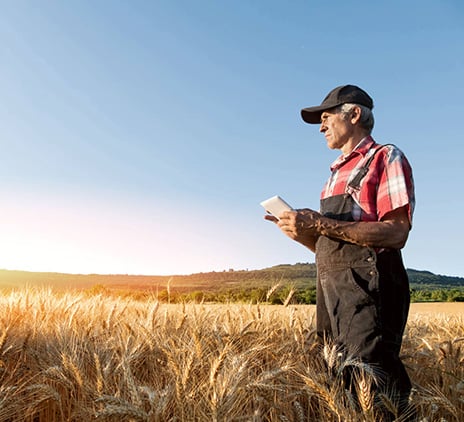
Vietnam’s under invested Agricultural Sector
Military relations with USA seem stronger whilst trade relationships seem under threat!
Vietnam is on a journey and there will continue to be humps and bumps in the road, but today Vietnam is on almost everyone’s radar screen and if it isn’t you should be asking why.
2017 saw the lowest addition to the country’s oil reserves in the country’s history with an addition of only 4 million tonnes against a target for the year of 10-15 million tonnes.
The Government continues to assert its intention to improve the business environment with the reduction in the requirements for inspections licenses and sub-licenses.
The year 2017 certainly ended with a bang, with an amount of US$ 5 billion going straight into the foreign exchange reserves as a result of the sale of 53% of the Governments holding in brewing company SABECO, to Thai Beverage.
Whilst the Government continues with its policy of enabling the business environment with a reduction in bureaucracy and the number of licenses and approvals the economy has overall shown some really great results.
The meeting which was attended by Prime Minister Nguyen Xuan Phuc, MPI Minister Nguyen Chi Dung, Head of the World Bank In Vietnam, Head of the IFC in Vietnam, Dr Vu Tien Loc-President of the Vietnam Chamber of Commerce and Industry, other Ministers and deputy ministers and members fot eh various Business Chambers in Vietnam, marked the 20th anniversary of the VBF in Vietnam, a platform for dialogue between the Private sector and the Vietnamese Government supported by the World Bank, IFC and other Bi-lateral and multi-lateral donors.
Asia Pacific is a vast and diverse region, and one of the strongest performing parts of the global economy.
The first project, I was involved in as project director, to assist the Vietnamese Government to speed up equitisation or privatization as we know it in the west, was funded by the Asian Development Bank in the year 2000. At that time there were over 12,000 SOE’s and whist the number has much reduced very few of the enterprises, which have been sought after by foreign investors in particular, have come to market through IPO’s.
Ho Chi Minh City (“HCMC”) has long been regarded as the commercial “capital” of Vietnam and the largest contributor to the state budget. It has been the economic spearhead for the whole Mekong Delta region since “Doi Moi”. However in recent years the growth rate in HCMC has been seen to be slowing. In 2010 GDP growth was 11.8% and between 2010 and 2015 ranged from 9.2 to 11.8% whilst in 2016 and forecast 2017 the rate will be in the range of 8%.
After months and years of discussion and deliberation Vietnam has finally published circular 102/2017/TT-BC, which will help guide the implementation of Decree 3/2017/ND-CP which was passed earlier in 2017. The big game changer is the fact that Vietnamese citizens will be able to enter casinos from December 2017, which up until now have been restricted to foreigners. The debate has really between balancing the communist ideals and the pragmatism of recognizing the significant tax revenue lost every year to neighboring countries and in particular Cambodia.