Drawing on data and insight from the Grant Thornton International Business Report (IBR), the Economist Intelligence Unit (EIU) and the International Monetary Fund (IMF), The global economy in 2014 answers these questions and more.
The presence of fraud and corruption in construction can take many forms; from falsely representing the number of hours a contractor works, through to collusion when bidding for contracts or paying bribes to secure a contract. These inevitably increase costs and, in the case of bribes, inflate the contract price.
Five years after the global financial crisis struck, residual effects continue to impact public financial management (PFM) in countries throughout the world.
IAS 39 ‘Financial Instruments: Recognition and Measurement’, the previous Standard that dealt with hedge accounting, was heavily criticised for containing complex rules which either made it impossible for entities to use hedge accounting or, in some cases, simply put them off doing so.
Investment Sentiment and Outlook Quarter 4, 2013
The food and beverage industry is poised for growth around the globe. After years of uncertainty, retrenchment and delayed investments, industry executives are once again looking to invest in new products, new capacity, new distribution channels and new markets. Even in countries still shaking off the recession, executives expect growth and plan to capture market share at home and abroad.
Global tax newsletter is designed to keep you up to date with significant tax developments around the world that impact businesses with cross-border operations. It addresses issues of a global nature as well as domestic tax developments of interest to foreign investors. The newsletter aims to cover tax developments on a regional and international basis.
This guide includes practical guidance on the detection of intangible assets in a business combination and also discusses the most common methods used in practice to estimate their fair value. It provides examples of intangible assets commonly found in business combinations and explains how they might be valued.
Presidential elections in some of the world’s largest economies, the sovereign debt crisis and the US fiscal cliff have all contributed to a global sense of economic uncertainty. How are major and developing markets faring in the face of these developments and what does the year ahead have in store?
Private equity firms around the world are adapting to a 'new fundraising road map', according to the Grant Thornton Global Private Equity Report 2013/14.
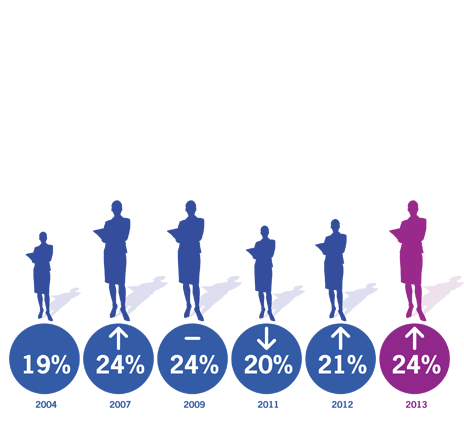
Our International Business Report with insights gained from in-depth interviews with five senior female executives from around the world, this report looks at the role of education in improving female participation and how this can help boost business growth.
The appetite for cross-border deals has rocketed by 18% during the past 12 months. This is the key finding from our latest research that looks at attitudes to mergers and acquisitions (M&A) among business leaders worldwide.
These are the results of the Grant Thornton Global Dynamism Index (GDI) 2013, an annual research project designed by the Economist Intelligence Unit, which ranks the development of the business growth environments of 60 of the world's largest economies over the past 12 months.
Grant Thornton understands that multinational tax challenges are among the most complex and expensive issues facing companies with international operations. And expatriate tax issues are a key consideration for companies working across borders.
Advanced Pricing Agreements (APAs) are helping to alleviate the risk of double taxation. In turn, Mutual Agreement Procedures (MAPs) may offer a smoother path to conflict resolution. But neither is a panacea.
This Expatriate tax ebook has been designed to provide an overview of the different tax systems around the globe and gives further information about tax systems and regulations in specific countries.